-
Mobile: +86 153 0260 4534
-
Address: Guangzhou Pacific Industrial Processing Zone











How to Waterproof an Outdoor LED Display
Outdoor LED display waterproofing is not achieved by spreading silicone around a cabinet. This guide explains how modules, enclosures, connectors, power supplies, drainage, materials, installation details, and testing must work together to protect an LED screen from rain.

Water always wins.
After reviewing outdoor-display specifications, enclosure standards, electrical rules, and the vague waterproofing promises found in too many supplier quotations, I have reached a blunt conclusion: most water failures begin before the first LED cabinet leaves the factory.
So why do buyers still treat waterproofing as a final inspection item?
A reliable outdoor LED display is not protected by one gasket, one IP65 label, or one worker holding a silicone gun. It is protected by a coordinated system covering the LED modules, cabinet joints, maintenance doors, power compartments, connectors, cable glands, mounting penetrations, drainage paths, coatings, fasteners, and installation structure.
Miss one layer and rain will find it.
Waterproofing Is an Engineering System, Not a Silicone Job
The word “waterproof” is used far too casually in the LED display industry.
A more technically honest description is weather-resistant under specified exposure conditions. An outdoor LED screen may resist wind-driven rain and water jets without being suitable for temporary immersion. Another cabinet may carry an impressive front-side IP rating while its rear service doors, fan openings, control box, or cable entries remain weak.
That distinction matters.
The International Electrotechnical Commission’s IP rating system grades an enclosure’s resistance to solids and liquids under defined tests. It does not certify the quality of the installation, wall penetrations, supporting structure, field wiring, or maintenance work performed after the laboratory test.
An IP65 LED module installed inside a badly fabricated cabinet is still a badly protected display.
For buyers comparing indoor and outdoor specifications, our indoor versus outdoor LED screen guide explains how weather exposure also affects brightness, cabinet construction, cooling, power demand, maintenance access, and total ownership cost.
My hard rule is simple: never accept “outdoor waterproof” as a complete specification. Ask what was tested, which surfaces were tested, under which standard, and whether the claim applies to the module, the cabinet, or the fully assembled display.
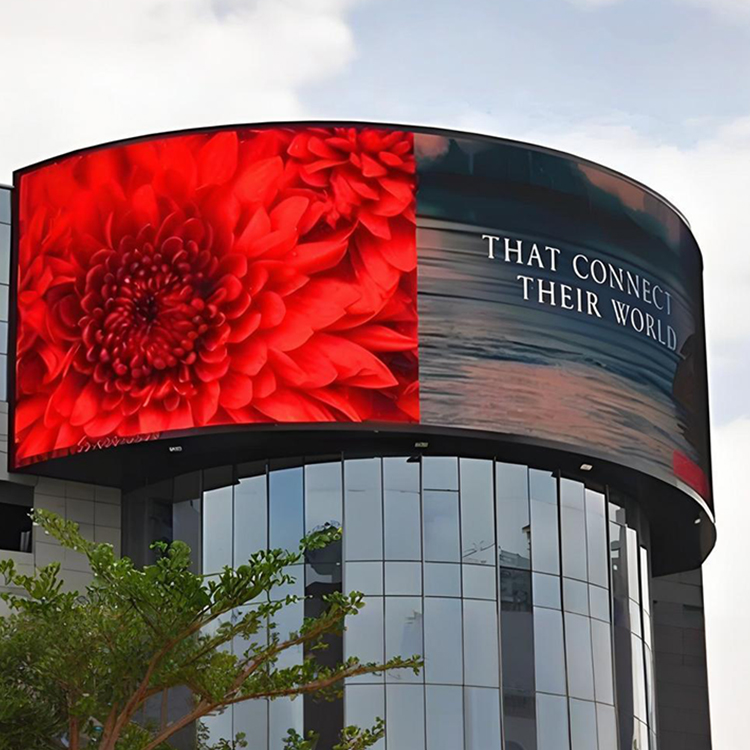
- Waterproofing Is an Engineering System, Not a Silicone Job
- What IP Ratings Really Mean for an Outdoor LED Screen
- The Eight-Layer Outdoor LED Display Waterproofing System
- 1. Classify the Actual Exposure
- 2. Protect Both the LED Module and the Cabinet
- 3. Design Gaskets for Compression, Aging, and Replacement
- 4. Treat Every Cable Entry as a Potential Leak
- 5. Isolate Power and Signal Connections
- 6. Control Condensation Instead of Pretending It Does Not Exist
- 7. Use Compatible Sealants, Not Household Caulk
- 8. Control Corrosion and Dissimilar Metals
- The Installation Can Destroy a Waterproof Cabinet
- How to Test a Weatherproof LED Display Before Shipment
- Waterproofing Failures I Would Reject Immediately
- A Procurement Specification Buyers Can Copy
- FAQs
- What is the best way to waterproof an outdoor LED display?
- Is IP65 enough for an outdoor LED screen?
- Should I choose IP67 instead of IP65?
- Can a factory hose test prove that an LED display is IP65?
- How do I protect an LED screen from rain and condensation?
- How often should an outdoor LED display be inspected?
- Specify the Waterproofing Before You Order
What IP Ratings Really Mean for an Outdoor LED Screen
The first IP digit describes protection against solid particles. The second describes protection against water.
IP65 is a common starting point for a fixed outdoor LED display because the “6” indicates dust-tight construction and the “5” addresses water-jet exposure. But IP65 does not mean the cabinet can be submerged, pressure-washed without limits, or installed with unprotected field connections.
| Rating | Solid protection | Water protection | Practical buyer interpretation |
|---|---|---|---|
| IP54 | Limited dust ingress permitted | Splashing water | Better suited to sheltered or partly protected locations |
| IP55 | Dust protected | Water jets | May suit controlled outdoor exposure, subject to installation details |
| IP65 | Dust-tight | Water jets | Common minimum target for exposed fixed outdoor LED cabinets |
| IP66 | Dust-tight | Powerful water jets | Better for severe wind-driven rain or stronger cleaning exposure |
| IP67 | Dust-tight | Temporary immersion under defined conditions | Useful for specific components, but does not automatically prove IPX6 jet resistance |
| IP68 | Dust-tight | Continuous immersion under manufacturer-defined conditions | Usually a component-level requirement rather than a reason to submerge an LED display |
| IP69/IP69K | Dust-tight | High-pressure, high-temperature jets | Relevant only where certified washdown conditions genuinely exist |
One detail is routinely hidden: front and rear ratings may differ.
A display advertised as IP65 may have an IP65 front and an IP54 rear. That might be acceptable when the rear is inside a protected building cavity. It is not acceptable when both sides face open weather.
The 2024 Planar Leyard LA Series brochure provides a useful benchmark because its LA04S, LA06S, and LA10S specifications explicitly list IP65 protection on both the front and rear. The same document identifies 6,000–7,500-nit brightness, a −30°C to 60°C operating range, and front-or-rear maintenance access. That is what a serious data sheet looks like: named models, measurable limits, and separate performance fields.
Our own outdoor modular full-color LED video wall uses 960 × 960 mm cabinets with P5–P10 options and remote device management. For a project like this, waterproofing must be reviewed at the module, cabinet, power, signal, and structural-interface levels—not treated as a single product adjective.
The Eight-Layer Outdoor LED Display Waterproofing System
1. Classify the Actual Exposure
“Outdoor” is not an environmental specification.
A screen under a three-metre canopy in a dry commercial courtyard faces a different risk from a coastal billboard exposed to typhoon rain, salt spray, direct sun, and maintenance washing.
Document at least:
- Screen orientation and mounting height
- Prevailing wind and wind-driven-rain direction
- Annual rainfall and storm intensity
- Coastal salt or industrial pollution exposure
- Irrigation, cleaning, and pressure-washing practices
- Maximum and minimum temperatures
- Direct solar load
- Snow, ice, or standing-water risk
- Front- or rear-service configuration
- Access available for inspection and repair
The U.S. Environmental Protection Agency defines extreme precipitation as events within the heaviest 1% of the historical record for an area and projects more extreme-precipitation days under both 1.5°C and 3°C warming scenarios. That is not an abstract climate argument for display owners. It means yesterday’s “normal rain” specification may be a weak basis for a 10-year outdoor installation.
2. Protect Both the LED Module and the Cabinet
The LED module is the first rain barrier on many front-service displays. Its mask, PCB, LED package, rear shell, mounting screws, and perimeter gasket must form a repeatable seal.
But a waterproof module does not rescue a leaking cabinet.
Require documentation for:
- Module IP rating
- Cabinet front IP rating
- Cabinet rear IP rating
- Power-box rating
- Control-box rating
- Maintenance-door construction
- Gasket material and profile
- Gasket compression method
- Screw type and tightening sequence
- Module-to-cabinet flatness tolerance
A warped cabinet can leave one corner of a gasket under-compressed. A missing screw can create the same problem. And an overtightened screw can distort the module or cut the gasket.
Tiny errors. Large consequences.
3. Design Gaskets for Compression, Aging, and Replacement
A gasket works by maintaining controlled compression across the entire joint.
It should not depend on workers guessing how hard to tighten each screw. The joint design must account for cabinet tolerances, module flatness, thermal expansion, ultraviolet exposure, temperature cycling, and material compression set.
Ask the manufacturer to identify:
- Gasket material, such as EPDM or silicone rubber
- Shore hardness
- Cross-sectional dimensions
- Target compression percentage
- Operating-temperature range
- UV and ozone resistance
- Expected replacement procedure
- Adhesive or retention method
The cheapest foam tape often looks acceptable during a factory inspection. Two summers later, it may have hardened, shrunk, or taken a permanent compression set.
That is when the rain begins entering.
4. Treat Every Cable Entry as a Potential Leak
Water does not need a large opening. It can follow a power cable, signal cable, screw thread, conduit, or poorly sealed gland.
A protected cable entry normally includes:
- A correctly sized cable gland
- A smooth, deburred hole
- Strain relief
- A downward-facing entry where practical
- A drip loop before the enclosure
- Cable insulation approved for outdoor exposure
- Compatible sealing around the penetration
- Enough service slack for maintenance
- A blanking plug for every unused opening
Do not accept a bare cable pushed through a drilled aluminum hole and covered with silicone.
The cable moves. The silicone separates. The metal edge attacks the insulation.
Our guide to waterproof LED channel letters covers the same failure mechanism in illuminated signs: grommets, cable glands, drip loops, drainage, wet-location components, and protected electrical connections must work together.
5. Isolate Power and Signal Connections
Power supplies, receiving cards, hub boards, relays, circuit breakers, and terminal blocks are usually less tolerant of moisture than the LED module face.
I prefer a zoned cabinet design:
- The display zone sheds bulk rain.
- The connection zone protects plugs and terminals.
- The power zone uses a separately sealed enclosure.
- The cabinet provides a controlled path for incidental moisture to leave.
Outdoor connectors should be identified by manufacturer and model, not described as “waterproof aviation plugs.” Require mating-cycle information, current rating, voltage rating, temperature limits, connector IP rating when mated, and approved cable diameter.
Conformal coating can add protection to printed circuit boards, but it is a secondary defence. Henkel describes conformal coatings as thin polymer films that resist moisture, dust, corrosion, and temperature extremes; they do not replace cabinet sealing, connector protection, or drainage.
6. Control Condensation Instead of Pretending It Does Not Exist
Outdoor temperature changes create pressure changes inside cabinets.
Warm internal air expands. Night cooling contracts it. Humid air can be pulled through imperfect joints and condense on cooler metal, PCBs, or connectors.
A completely sealed-looking cabinet can therefore contain water without experiencing obvious rain penetration.
Depending on the enclosure design, condensation control may include:
- Pressure-equalizing membrane vents
- Dedicated drainage points
- Sloped internal surfaces
- Separation between drainage and live parts
- Anti-condensation heaters in cold climates
- Controlled ventilation or heat exchangers
- Desiccant only where maintenance and replacement are defined
- Thermal modelling for power and solar loading
Do not drill random holes into a certified enclosure. Drainage and ventilation must be engineered before testing because any later modification can invalidate the original ingress-protection claim.
7. Use Compatible Sealants, Not Household Caulk
Sealant is important. It is simply not the whole answer.
For metal cabinets and electrical assemblies, I would normally require a compatible neutral-cure product rather than an unidentified acetoxy silicone. Acetoxy cure can release acetic acid, CH₃COOH, during curing, creating a corrosion concern around certain metals and enclosed electronics.
For example, DOWSIL 794F Alkoxy Sealant is described by Dow as neutral curing, non-corrosive to metals, elastic, and resistant to ultraviolet radiation and temperature extremes. That does not make it automatically suitable for every LED cabinet; it shows the level of technical documentation a specified sealant should have.
Check compatibility with:
- Powder-coated aluminum
- Die-cast aluminum
- Galvanized steel
- Stainless steel
- Polycarbonate
- PVC and silicone cable insulation
- Rubber gaskets
- PCB coatings
- Existing paint systems
- Cleaning solvents
Clean first. Seal second.
Silicone applied over oil, dust, release agent, wet paint, or metal shavings is decoration—not waterproofing.
8. Control Corrosion and Dissimilar Metals
Water starts the problem. Corrosion extends it.
Aluminum cabinets, carbon-steel screws, copper grounding conductors, stainless brackets, zinc coatings, and salt contamination can form aggressive corrosion cells when moisture remains trapped between them.
For coastal or polluted environments, specify:
- Marine-grade or project-approved coating systems
- Stainless or otherwise corrosion-resistant fasteners
- Isolation between incompatible metals
- Coated cut edges and drilled holes
- Salt-spray test requirements where justified
- Drainage that prevents standing water
- Replaceable sacrificial hardware where appropriate
- Inspection access to high-risk joints
NEMA enclosure classifications also distinguish ordinary outdoor-water protection from corrosion protection. NEMA Type 4 addresses rain, sleet, snow, splashing, and hose-directed water, while Type 4X adds an extra corrosion-protection requirement. IP and NEMA classifications are not interchangeable, but the distinction exposes an important procurement mistake: water resistance and corrosion resistance are different specifications.
The Installation Can Destroy a Waterproof Cabinet
A display may leave the factory in good condition and still fail because the installation crew drills unsealed holes, damages gaskets, routes cables upward, leaves service doors misaligned, or mounts a power box where roof runoff pours directly onto it.
The supporting structure must shed water away from the screen.
Review:
- Roof and façade runoff paths
- Flashing above the display
- Cabinet-to-frame interfaces
- Structural penetrations
- Cable-tray drainage
- Conduit orientation
- Junction-box position
- Power-disconnect enclosure
- Rear-service walkway
- Air-conditioning or fan penetrations
- Water accumulation behind decorative cladding
U.S. workplace electrical rules are explicit about wet environments. OSHA 29 CFR 1910.305(e) requires cabinets, boxes, fittings, and panelboard enclosures in damp or wet locations to prevent water from entering and accumulating, and it requires weatherproof enclosures in wet locations. OSHA also states that equipment must be identified for the environment where dampness, liquids, corrosion, or excessive temperatures are present.
That language destroys a common excuse: “The power supply is under a cover.”
A loose cover is not a weatherproof enclosure.
How to Test a Weatherproof LED Display Before Shipment
A factory worker spraying a cabinet with a garden hose is not performing an IEC 60529 certification test.
The hose test can still reveal workmanship defects. It simply must not be misrepresented as formal IP certification.
A defensible quality-control plan includes the following stages.
Document Review
Confirm:
- Approved cabinet drawings
- Front and rear IP claims
- Named module and cabinet models
- Power-supply and connector data sheets
- Gasket specification
- Sealant technical data sheet
- Cable-gland model and cable range
- Coating specification
- Fastener schedule
- Environmental test standard
- Permitted component substitutions
For repeat production, use an approved bill of materials through documented OEM and ODM signage engineering. Otherwise, the tested prototype may contain one gasket, connector, or power supply while the production batch quietly receives another.
Visual and Mechanical Inspection
Inspect every sampled cabinet for:
- Missing or pinched gaskets
- Uneven compression
- Loose modules
- Warped doors
- Unsealed holes
- Incorrect glands
- Upward-facing cable routes
- Blocked drainage
- Coating damage
- Corrodible hardware
- Debris trapped on sealing surfaces
- Excess sealant interfering with service access
Controlled Water-Exposure Test
The agreed test method should define:
- Test standard
- Water source
- Flow or pressure
- Nozzle type
- Distance
- Direction
- Exposure duration
- Powered or unpowered condition
- Cabinet orientation
- Sample quantity
- Pass/fail criteria
- Post-test opening procedure
Do not improvise these conditions after production.
Post-Exposure Inspection
After testing:
- Isolate electrical power.
- Open the cabinet according to the approved procedure.
- Inspect module joints, doors, glands, connectors, power zones, and low points.
- Record any droplets, wet marks, corrosion, or water tracks.
- Check insulation and grounding as required by the project.
- Reassemble with inspected or replaced gaskets.
- Repeat electrical and display-function tests.
- Save dated photographs and the signed report.
For fine-pitch purchasing decisions beyond waterproofing, the P2 versus P3 versus P4 LED display comparison explains how pixel pitch, viewing distance, resolution, cabinet size, and cost should be reviewed together.
Waterproofing Failures I Would Reject Immediately
“IP65 LEDs” With No Cabinet Rating
The LEDs may survive while the receiving card, hub board, terminal block, or power supply corrodes.
Component protection is not assembly protection.
One IP Rating With No Front/Rear Identification
This often hides a weaker rear enclosure.
Ask for two values.
Silicone Covering Every Joint
More silicone can conceal bad fabrication, block drainage, contaminate gaskets, make modules difficult to service, and separate during thermal cycling.
Precision beats volume.
Indoor Power Supplies Inside Homemade Boxes
A dry-location driver does not become an outdoor driver because someone surrounds it with sheet metal.
Unnamed Connectors and Glands
“Waterproof connector” is sales language. A technical specification includes manufacturer, model, cable range, current, voltage, material, temperature range, and tested rating.
No First-Article Water Test
The first completed production cabinet should be inspected and tested before the remaining batch is assembled.
Finding a gasket problem after 200 cabinets are packed is not quality control. It is an expensive argument.
No Maintenance Plan
Gaskets age. Filters clog. screws loosen. Coatings are scratched. Technicians forget to clean sealing surfaces before closing doors.
Outdoor LED display waterproofing is a lifecycle process, not a one-time factory event.
A Procurement Specification Buyers Can Copy
Use language such as:
The outdoor LED display shall use weather-resistant modules and cabinets suitable for the documented installation environment. The supplier shall state separate front and rear IP ratings, identify the applicable IEC 60529 test basis, and provide supporting test documentation for the named cabinet model.
Add these requirements:
- Front and rear IP ratings stated separately
- IP rating for power and control enclosures
- Named module, connector, gland, power-supply, gasket, and sealant models
- Approved bill of materials with no substitution without written approval
- Corrosion-protection system appropriate to the installation location
- Drainage and pressure-control details shown in cabinet drawings
- Water-entry points and service doors identified
- First-article water-exposure test
- Production sampling frequency
- Internal photographs before closure
- Electrical tests before and after water exposure
- Spare gasket, module, connector, and power-supply quantities
- Warranty exclusions clearly stated
- Maintenance inspection schedule
- Installation drawing showing flashing, cable routes, conduits, and penetrations
Then compare suppliers on documented systems—not on who writes “IP65 waterproof” in the largest font.
FAQs
What is the best way to waterproof an outdoor LED display?
An outdoor LED display is properly waterproofed when its modules, cabinets, power equipment, connectors, cable entries, mounting penetrations, drainage paths, and corrosion controls work as one tested weather-resistant system, rather than relying on a high IP label or a thick bead of silicone around visible seams.
Start by classifying the installation environment. Then specify separate front and rear IP ratings, named electrical components, gasket construction, protected wiring entries, corrosion-resistant hardware, drainage, installation flashing, and a documented factory water-exposure test.
Is IP65 enough for an outdoor LED screen?
IP65 is generally a practical starting rating for an outdoor LED screen because it indicates dust-tight construction and resistance to water jets, but suitability still depends on whether both cabinet sides are rated, how severe the weather is, and whether field wiring, power enclosures, connectors, drainage, and installation penetrations receive equal protection.
A sheltered façade may perform reliably with an appropriately constructed IP65 system. A coastal, typhoon-prone, washdown, or fully exposed installation may justify IP66, additional corrosion protection, or separately rated components.
Should I choose IP67 instead of IP65?
IP67 is a dust-tight rating that includes temporary-immersion protection under defined test conditions, but it is not automatically the best specification for every fixed outdoor display because immersion tests, water-jet tests, thermal management, service access, and completed-installation performance address different risks.
Choose the rating from the actual exposure. A properly installed IP65 or IP66 cabinet may be more appropriate than an IP67 component placed inside a poorly ventilated, difficult-to-service assembly.
Can a factory hose test prove that an LED display is IP65?
A factory hose test can expose leaking gaskets, doors, cable glands, module joints, and workmanship defects, but it cannot independently prove an IP65 rating unless the equipment, water flow, pressure, distance, duration, orientation, sample preparation, and pass criteria follow the applicable IEC 60529 laboratory procedure.
Treat an informal spray test as a useful production check. Request formal supporting documentation when an official IP claim is part of the contract.
How do I protect an LED screen from rain and condensation?
Rain and condensation are controlled by combining sealed rain-facing surfaces, compressed gaskets, protected connectors, downward cable routes, drip loops, suitable power enclosures, corrosion-resistant materials, controlled drainage, pressure equalization where required, and installation details that prevent roof or façade runoff from entering behind the display.
Do not seal random holes or add vents after certification. Drainage and pressure management should appear on the approved cabinet and installation drawings before production begins.
How often should an outdoor LED display be inspected?
An outdoor LED display should be inspected on a risk-based schedule covering gaskets, doors, screws, cable glands, connectors, drainage paths, coatings, fans, power enclosures, structural penetrations, and signs of moisture or corrosion, with additional checks after severe storms, repair work, relocation, or cabinet opening.
For heavily exposed commercial installations, a documented inspection every three to six months is a reasonable starting point, but the manufacturer, local engineer, warranty terms, climate, and regulatory requirements should determine the final interval.
Specify the Waterproofing Before You Order
Do not wait until production is complete to ask whether the outdoor LED display is waterproof.
Send the project location, screen dimensions, pixel pitch, cabinet layout, mounting structure, service direction, power configuration, climate exposure, corrosion conditions, required certification, and expected operating life with your request for quotation.
Ask for separate front and rear IP ratings. Demand named components. Approve the cabinet section drawing. Freeze the bill of materials. Test the first article.
Then document everything.
For a project-specific cabinet, waterproofing, and production review, submit your requirements through the custom signage factory quotation page. Include your installation drawings and environmental conditions so the display can be specified around the site rather than sold from a generic outdoor-screen price list.
Comments