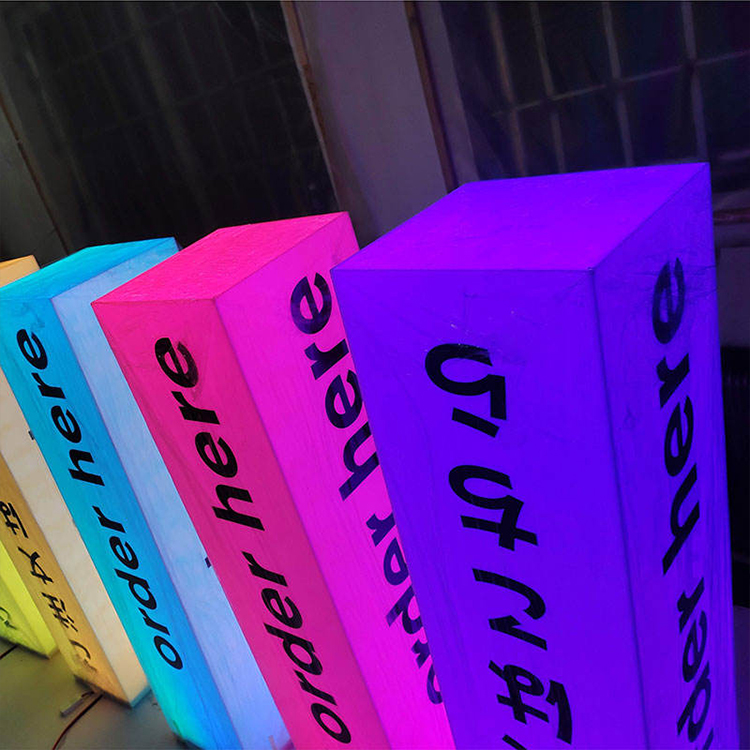
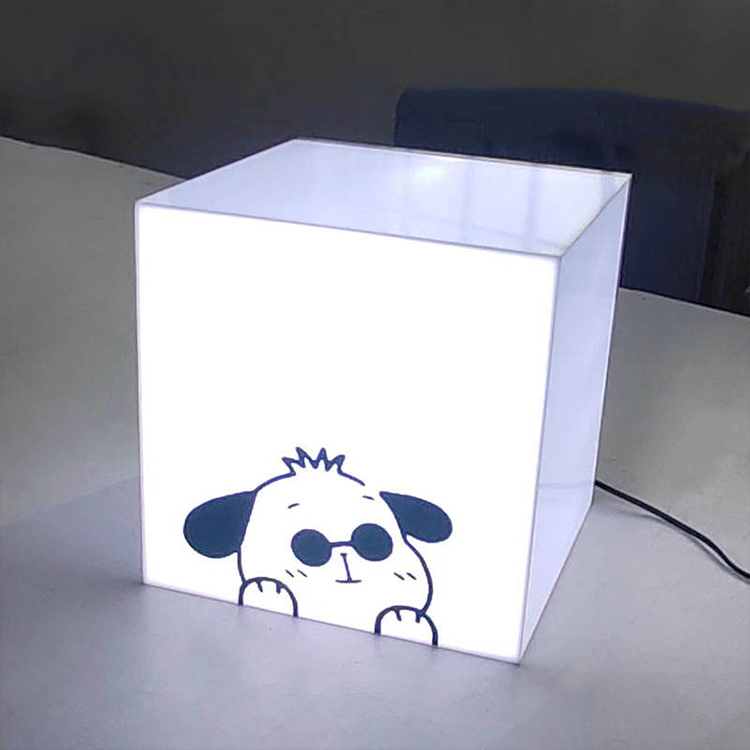
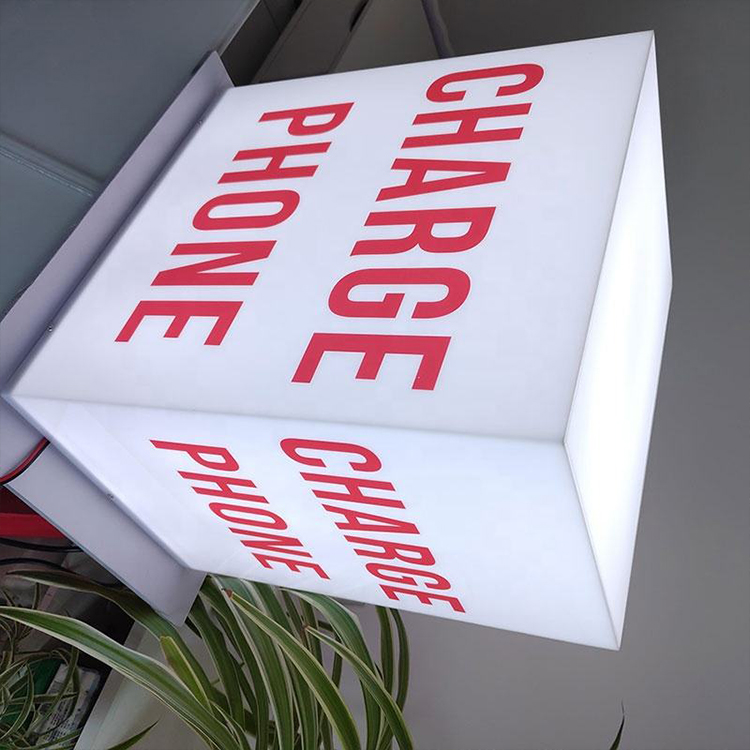
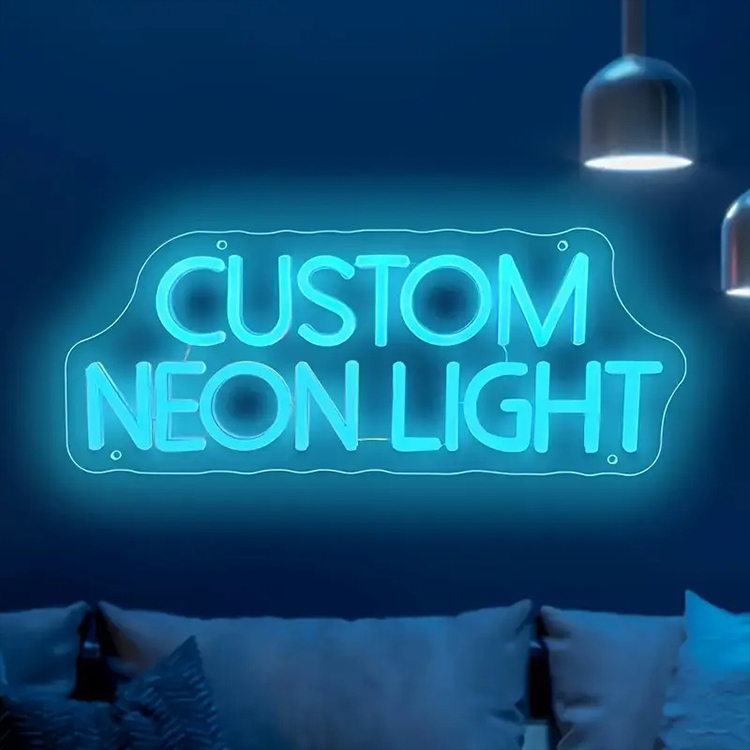
Tell us your sign type, dimensions, quantity, materials, illumination, voltage, mounting method, and delivery country. Our engineering team will review your requirements and prepare a factory quotation with recommended specifications and estimated production lead time.
Before You Leave, Get a Factory Quote
Share your drawings, dimensions, materials, quantities, illumination requirements, and delivery destination. Our signage engineering team will review your project and provide a tailored manufacturing proposal for LED letters, light boxes, pylon signs, gas station signage, or other custom sign systems.
An edge-lit light box places LEDs around a light-guide panel, producing a thin display with relatively low power demand. A backlit light box positions LED modules directly behind the graphic, creating stronger brightness and more consistent illumination. Edge-lit systems usually suit slim indoor displays, while backlit systems are better for large, bright, outdoor, or high-impact applications.
That is the clean answer.
The real purchasing decision is less tidy because sign size, graphic material, installation depth, ambient light, operating hours, LED spacing, thermal control, diffuser quality, access method, and replacement cost can all reverse what initially looks like the cheaper option.
So which design actually makes commercial sense?
How Edge-Lit and Direct Backlit Light Boxes Work
Thin changes everything.
An edge-lit light box uses LEDs mounted along one or more edges of a transparent light-guide plate, normally made from optical-grade PMMA acrylic, and the plate redirects that sideways light toward the printed graphic through laser engraving, etched dots, screen-printed patterns, reflective film, and diffusion layers.
The LEDs do not shine directly at the poster. Instead, light enters the acrylic from the side, travels through the panel by internal reflection, and exits through a controlled extraction pattern.
That construction allows an edge-lit light box to be remarkably shallow. It is the basic engineering logic behind many crystal and slim LED light boxes used for retail posters, menus, property listings, directories, and window advertising. The website’s category includes low-profile acrylic panels and aluminum snap-frame systems built for replaceable graphics.
A direct backlit light box works differently. LED strips or individual LED modules are arranged across the rear panel, facing the graphic. Light travels forward through an internal air gap, diffuser, acrylic face, fabric graphic, or translucent film.
The larger the distance between the LEDs and the graphic, the easier it becomes to blend separate points of light into an even field. But that depth also produces a thicker cabinet.
This is why outdoor menu boards, large SEG fabric displays, double-sided cabinets, and roadside signs frequently use direct backlighting. A listed backlit drive-thru menu board, for example, uses LED strips behind an acrylic display face and is offered in A0 through A4 formats for outdoor ordering lanes.
The table below shows the practical differences commercial buyers should examine. The depth and power figures are common project ranges rather than universal standards; final values depend on the dimensions, desired luminance, graphic material, LED efficacy, and cabinet design.
Evaluation Point
Edge-Lit Light Box
Direct Backlit Light Box
LED position
Along one or more panel edges
Distributed behind the graphic
Optical system
PMMA light-guide plate, reflector and diffuser
LED modules or strips, air gap and diffuser
Typical cabinet depth
Approximately 8–30 mm for many indoor formats
Approximately 40–150 mm or more
Visual profile
Slim, clean and architectural
Deeper, more cabinet-like
Brightness potential
Moderate to high, depending on panel size
High, with easier output scaling
Uniformity on large graphics
More difficult to maintain
Generally easier to control
Number of LEDs
Usually fewer
Usually more
Power consumption
Often lower for comparable small displays
Often higher because more LEDs are installed
Heat distribution
Concentrated near the edges
Spread across the rear panel
Graphic size suitability
Small and medium formats
Medium, large and oversized formats
Maintenance access
Edge bars or complete optical panel may require removal
Individual rear LED modules may be replaceable
Double-sided construction
Possible, but requires a specialized optical assembly
Straightforward with LEDs between two graphic faces
Outdoor suitability
Possible with engineered sealing and thermal control
Common for outdoor and high-brightness applications
SEG graphics, outdoor menus, street signs, large advertisements
Main risk
Bright edges and a darker center
Visible LED hotspots and excess cabinet depth
The hardest measurement to judge from a supplier’s photographs is uniformity.
A factory can increase exposure during photography, photograph the display in a dark room, or edit a hotspot out of the image. None of that tells a buyer what the installed sign will look like beside a sunlit storefront window.
I would not approve a production order from photographs alone.
For repeat orders, ask for measurable acceptance criteria such as:
Average face luminance in cd/m²
Minimum-to-maximum luminance ratio
Color temperature, such as 4000 K, 5000 K, or 6500 K
Color rendering index, such as CRI ≥80 or CRI ≥90
Power consumption in watts per complete unit
Input voltage and output voltage
LED module brand, model, quantity, and spacing
Driver brand and rated load
Surface temperature after an 8-hour test
Inspection photographs taken at fixed exposure settings
The U.S. Department of Energy’s LED guidance explains that LEDs emit light directionally, reducing some of the losses caused by reflectors and diffusers in older lighting systems. That same directionality is useful in light boxes, but only when the optical layout is designed correctly.
Where Edge-Lit Light Boxes Perform Best
Edge lighting earns its place when cabinet depth matters more than maximum brightness.
Typical applications include wall-mounted menu frames, retail promotion posters, estate-agent window displays, hotel directories, cinema poster frames, banking information displays, elevator advertising, and suspended acrylic panels.
An A2 ultra-slim LED snap-frame light box illustrates the format well: an aluminum snap frame, clear acrylic face, 12 V LED system, wall-mounted construction, and four-sided access for replacing posters.
Edge-Lit Light Boxes Save Valuable Installation Depth
A shallow frame can sit closer to a wall, fit inside a shop window, or integrate into furniture where a 75 mm cabinet would look clumsy.
This is not merely an aesthetic issue. Lower depth can reduce:
Projection from the finished wall
Shipping volume
Frame weight
Mounting loads
Interference with doors or pedestrian routes
The visual bulk of repeated displays
In high-end retail interiors, those millimeters matter.
Edge Lighting Can Reduce Installed Wattage
Because LEDs are concentrated around the perimeter, an edge-lit panel may use fewer LED modules than a comparable direct backlit cabinet. But “edge-lit uses less power” should never be treated as an automatic rule.
A poorly designed light-guide plate may require higher-output LEDs driven aggressively to compensate for weak center brightness. That raises heat at the edge, accelerates lumen depreciation, and can erase the expected energy advantage.
The hard truth is this: low wattage means nothing when the graphic looks dead.
Edge-Lit Systems Work Well for Frequently Changed Posters
Snap frames and magnetic acrylic covers make edge-lit systems practical for advertising campaigns that change weekly or monthly.
A supermarket can replace a promotion without opening a deep cabinet. A restaurant can update pricing. A property agency can change listings. A bank can replace interest-rate notices.
This is where buyers should examine graphic access, not just illumination.
A beautiful display that takes 20 minutes to open becomes expensive when 200 branches must change artwork on the same morning.
Where Backlit Light Boxes Win
Direct backlighting is usually the safer choice when brightness, size, or outdoor visibility matters more than minimum cabinet depth.
I would normally specify a direct backlit light box for:
Large-format retail graphics
Outdoor menu boards
Drive-thru ordering lanes
Freestanding street advertising
Bus-stop displays
Double-sided projecting signs
Airport and transport advertising
Large SEG fabric light boxes
Displays exposed to high ambient light
Graphics with dense blacks or saturated brand colors
The company’s street light box range includes outdoor, pole-mounted, wall-mounted, projecting, freestanding, double-sided, and scrolling formats. These are precisely the applications where cabinet strength, weather protection, maintenance access, and reliable direct illumination often matter more than having the thinnest frame.
Backlighting Scales Better Across Large Faces
As an edge-lit panel becomes wider, light must travel farther from the LEDs toward the center. Optical losses increase, and small errors in the extraction pattern become more visible.
Direct backlighting scales more predictably. Additional modules can be distributed across the rear panel, and spacing can be adjusted around dark graphic areas, structural members, seams, or cabinet edges.
This does not guarantee perfect illumination.
LED modules placed too far apart produce hotspots. Modules installed too close together add unnecessary cost and heat. A shallow cabinet without the correct lens angle can still look striped.
But the engineer has more variables to control.
Backlit Cabinets Are Easier to Build for Double-Sided Graphics
A double-sided light box can place a central LED system between two translucent faces. Each side receives direct illumination, and the cabinet structure can be engineered around a shared frame.
Achieving a similarly bright, even result with two edge-lit faces may require two light-guide panels, additional reflective layers, and more complicated edge management.
That raises material cost quickly.
Outdoor Projects Need More Than an IP Rating
An IP65 or IP67 label is useful, but it does not answer every outdoor engineering question.
Buyers should also inspect:
Drainage paths
Cable gland position
Condensation control
Internal ventilation
Aluminum thickness
Weld quality
Door seals
UV resistance
Wind-load support
Corrosion treatment
Driver access
Surge protection
Operating temperature limits
According to Penn State Extension’s guidance on roadside signage, adding illumination can improve sign visibility and readability at night and in weather conditions such as rain. The light box still needs enough contrast and controlled brightness to remain legible rather than merely luminous.
The Energy-Cost Argument Is Often Oversimplified
The U.S. Department of Energy reports that residential LED products use at least 75% less energy and can last up to 25 times longer than incandescent lighting. DOE also estimates that nationwide LED adoption could save 569 TWh annually by 2035. Those figures explain why LED has displaced fluorescent and incandescent illumination, but they do not prove that every edge-lit box is automatically more efficient than every backlit box.
The correct comparison is complete-unit wattage at the required face luminance.
Consider a multi-site retail program with:
20 stores
10 light boxes per store
200 light boxes in total
14 operating hours per day
An illustrative electricity price of $0.15 per kWh
A 30 W edge-lit specification
A 45 W direct backlit specification
The 15 W difference across 200 units becomes a 3 kW connected-load difference.
Annual consumption difference:
3 kW × 14 hours × 365 days = 15,330 kWh
Illustrative annual energy-cost difference:
15,330 kWh × $0.15 = $2,299.50
Illustrative five-year difference:
$2,299.50 × 5 = $11,497.50
That sounds decisive.
But suppose the edge-lit panel develops dark centers, yellowing acrylic, or failed perimeter strips after three years, while the backlit design remains serviceable through individual module replacement. The theoretical energy saving can disappear inside one unplanned replacement cycle.
Energy is only one line in total cost of ownership.
Controls Can Matter More Than the Lighting Layout
A light box running at full output inside a closed shop at 3:00 a.m. is not efficient, no matter how advanced its LEDs are.
A Lawrence Berkeley National Laboratory project with Xcel Energy reported that previous studies of workstation-specific lighting and controls indicated annual savings of 28% to 63%, averaging 47%. FLEXLAB testing of the integrated system showed 94% savings during daylight hours and approximately 87% across all hours against the test baseline. The application was commercial office lighting rather than signage, but the procurement lesson carries over: scheduling, dimming, commissioning, and controls can outweigh a small hardware-efficiency difference. Read the LBNL project report.
For a commercial LED light box program, consider:
Astronomical timers
Photocells
Building management system integration
Nighttime dimming
Separate circuits for window and interior displays
Remote power monitoring
Scheduled shutdown outside trading hours
A 40 W light box operating 10 hours per day may consume less annual energy than a 25 W light box left on continuously.
Hours win.
Why Uniformity Fails
Uneven illumination is not a mysterious LED problem. It is usually a specification, optical, assembly, or quality-control problem.
Common Edge-Lit Failures
Bright edges and dark centers commonly result from:
An undersized light-guide plate
Incorrect dot density
Poor optical-grade acrylic
Inadequate reflective film
Low-output LEDs
LEDs installed on only one edge of a wide panel
Excessive panel dimensions
Dust between optical layers
Loose contact between the LED bar and acrylic edge
Heat damage at the perimeter
Edge polishing matters more than buyers think. A rough or poorly machined acrylic edge reduces light coupling before the illumination even enters the panel.
Common Backlit Failures
Direct backlit hotspots and stripes commonly result from:
Excessive spacing between LED modules
Insufficient cabinet depth
A narrow LED lens angle
No secondary diffuser
Reflective surfaces with inconsistent finish
Structural shadows behind the graphic
LED rows that do not follow the graphic proportions
Different LED batches mixed in one cabinet
Drivers operating modules above the intended current
This is why a supplier should prepare an LED layout before mass production.
For OEM programs, the custom OEM and ODM signage service describes a process based on drawing review, sign depth, materials, illumination, voltage, mounting structure, prototype development, fabrication, and final inspection. That documentation becomes especially important when the same light box must be reproduced for dozens or hundreds of locations.
What Professional Buyers Should Put in the RFQ
Do not send a supplier only the words “A1 LED light box.”
That request is too vague to price accurately and too weak to control production.
A serious RFQ should include:
RFQ Field
Example Requirement
Visible graphic size
A1, 594 × 841 mm
Overall cabinet size
Supplier to confirm
Quantity
100 units
Installation
Indoor wall-mounted
Illumination type
Edge-lit or direct backlit alternative
Face material
Clear acrylic with printed translucent graphic
Frame material
Extruded aluminum
Frame finish
Black powder coating, RAL 9005
Input power
100–240 V AC
Internal LED voltage
12 V DC or 24 V DC
Color temperature
6500 K
CRI
Minimum 80
Brightness
Supplier to state measured face luminance
Uniformity
Supplier to state minimum-to-maximum ratio
Driver load
Maximum 80% of rated capacity
Operating schedule
14 hours per day
Graphic access
Four-sided snap frame
Cable exit
Rear center
Compliance
Confirm applicable CE, RoHS, UL, ETL, or local requirements
Packaging
One unit per export carton
Quality evidence
8-hour illumination test and inspection photographs
Warranty
State parts and complete-product coverage separately
For outdoor units, add the intended location, wind conditions, minimum and maximum temperature, rain exposure, mounting height, maintenance access, electrical standard, and required ingress protection.
And ask one blunt question:
“What exactly happens when one LED module fails?”
The answer reveals whether the supplier has designed a maintainable product or a disposable one.
Edge-Lit or Backlit: Which Should You Choose?
Choose an edge-lit light box when the project prioritizes:
Minimum depth
Low visual weight
Indoor installation
Small or medium poster formats
Frequent graphic replacement
Lower connected load
Window, wall, or suspended mounting
A clean architectural appearance
Choose a direct backlit light box when the project prioritizes:
Higher brightness
Large graphics
Strong center illumination
Outdoor visibility
Double-sided displays
SEG fabric graphics
Easier LED-module replacement
Scaling across oversized cabinets
Consistent performance in demanding ambient light
For most A3, A2, and A1 indoor posters, I would start by evaluating edge lighting.
For large SEG walls, outdoor drive-thru boards, street cabinets, high-brightness windows, and double-sided signs, I would start with direct backlighting.
But I would not approve either design until the supplier provides actual wattage, luminance, uniformity, LED layout, temperature test results, and maintenance access details.
That is the buying rule.
FAQs
What is the main difference between an edge-lit and backlit light box?
An edge-lit light box places LEDs around the edges of a light-guide panel, while a backlit light box positions LED strips or modules directly behind the graphic. Edge lighting creates a thinner cabinet, whereas direct backlighting normally provides stronger brightness, easier scaling, and more consistent illumination across large display surfaces.
Edge-lit models are commonly selected for indoor poster frames and menu displays. Backlit models are commonly selected for large SEG graphics, outdoor menus, street advertising, and double-sided cabinets.
Is an edge-lit light box better than a backlit light box?
An edge-lit light box is better when minimum depth, lower weight, reduced power demand, and a clean indoor appearance are the main project priorities. A backlit light box is better when the display requires higher brightness, a larger graphic area, outdoor operation, double-sided illumination, or easier replacement of individual LED modules.
Neither design is universally superior. The correct choice depends on graphic size, ambient light, mounting space, operating hours, maintenance access, and the required illumination level.
Which type of LED light box uses less electricity?
An edge-lit light box often uses less electricity because it can illuminate a small or medium display with fewer LEDs positioned around the perimeter. However, actual consumption must be compared using complete-unit wattage at the same graphic size, luminance, color temperature, operating schedule, and measured illumination uniformity.
A weak edge-lit panel may require high-output LEDs driven harder, while an efficient direct backlit box may use carefully spaced modules and dimming controls. Ask suppliers for measured watts, not marketing claims.
Are edge-lit light boxes suitable for outdoor use?
An edge-lit light box can be used outdoors when its frame, electrical system, seals, light-guide panel, cable entries, drainage, and thermal design are engineered for the installation environment. Outdoor suitability depends on the complete enclosure and mounting system, not simply whether the LED strips carry an IP65 or IP67 rating.
For large outdoor signs exposed to strong daylight, direct backlighting is frequently preferred because it can deliver higher output and more predictable uniformity.
How long does an LED light box last?
An LED light box can operate for tens of thousands of hours when its LEDs, driver, thermal design, wiring, voltage, moisture protection, and operating schedule are properly specified. Its practical service life is often determined by the power supply, heat buildup, acrylic condition, water ingress, connectors, and maintenance access rather than the LED chips alone.
Buyers should ask whether the quoted lifetime refers to the LED chip, the LED module, the driver, or the complete light box. These are not the same warranty promise.
What is the best light box for retail displays?
The best light box for retail displays is usually a slim edge-lit frame for small and medium posters or a direct backlit cabinet for large, high-brightness graphics. The decision should consider window sunlight, viewing distance, graphic-change frequency, installation depth, operating hours, brand-color accuracy, and the number of stores in the rollout.
Retailers managing multiple locations should also standardize frame finish, color temperature, electrical components, graphic access, mounting points, packaging, and inspection records.
Get the Right LED Light Box Specification
Do not choose a light box from thickness and price alone.
Send us your graphic dimensions, quantity, installation environment, target brightness, operating hours, voltage, mounting method, artwork, and delivery country. We can review whether an edge-lit, direct backlit, slim snap-frame, outdoor cabinet, or SEG system is the more sensible manufacturing option.
Custom Signage Factory manufactures commercial signs for sign companies, contractors, distributors, and multi-site brands. With a 20,000 m² workshop, 80+ production workers, 50+ machines, and an annual capacity of 100,000 pieces, we produce LED letters, light boxes, pylon signs, gas station signage, neon signs, and custom OEM sign systems.