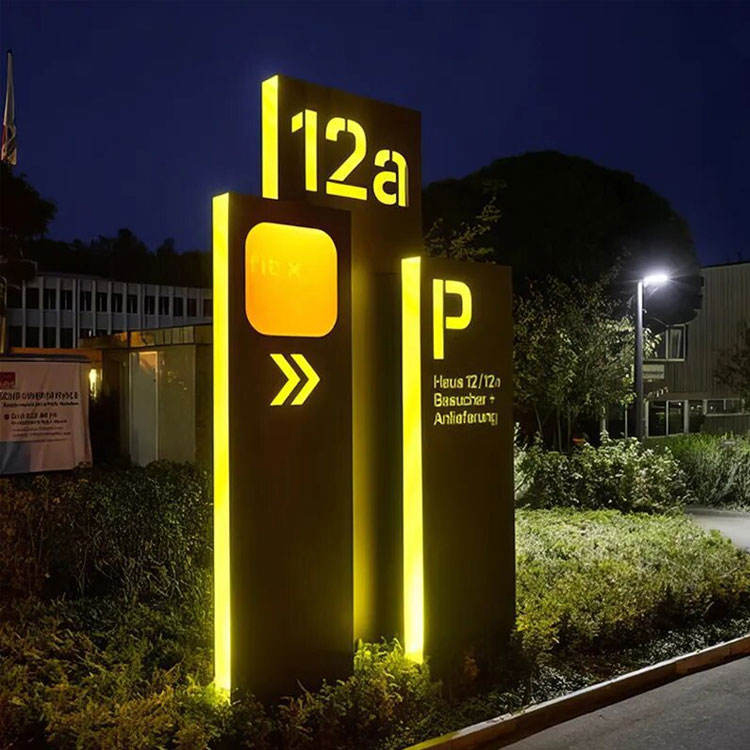
Tell us your sign type, dimensions, quantity, materials, illumination, voltage, mounting method, and delivery country. Our engineering team will review your requirements and prepare a factory quotation with recommended specifications and estimated production lead time.
Before You Leave, Get a Factory Quote
Share your drawings, dimensions, materials, quantities, illumination requirements, and delivery destination. Our signage engineering team will review your project and provide a tailored manufacturing proposal for LED letters, light boxes, pylon signs, gas station signage, or other custom sign systems.
Pylon Signs vs Monument Signs: Key Differences for Commercial Projects
Height changes everything.
When a commercial property sits behind a parking field, competing buildings, mature trees, or six lanes of fast-moving traffic, the difference between a pylon sign and a monument sign is not cosmetic—it determines whether motorists identify the property early enough to enter safely.
So why do buyers still choose from renderings before measuring the site?
I see this backward logic constantly in commercial signage specifications. The architect prefers a low masonry monument because it looks refined on paper. The leasing team wants twelve tenant names. The property owner expects visibility from 500 feet away. Those three requirements may be physically incompatible.
Here is the hard truth: pylon signs and monument signs are not interchangeable versions of the same product. A pylon is primarily a long-range identification structure. A monument is primarily an entrance-level branding structure. Both can be illuminated, digital, single-tenant, or multi-tenant, but they solve different visibility problems.
The Practical Difference Between Pylon Signs and Monument Signs
A pylon sign is a freestanding sign elevated on one or more steel posts, shafts, or enclosed structural supports. Its height allows the sign face to rise above parked vehicles, vegetation, nearby buildings, and competing roadside advertising.
A monument sign is a low-profile freestanding sign supported by a solid base extending from grade to the sign body. That base may use aluminum cladding, brick, stone veneer, stucco, high-density urethane, stainless steel, or architectural composite panels.
The International Sign Association describes a pylon as a freestanding sign with a visible support structure and a monument sign as a ground sign with a low overall height. Medina, Minnesota’s municipal code adds a more construction-oriented distinction: its monument definition specifies a support structure that is solid from grade upward, while its pylon definition permits posts, shafts, walls, or piers.
That distinction matters during permitting. “Pole sign,” “pylon sign,” “ground sign,” “freestanding sign,” and “monument sign” do not always mean the same thing from one jurisdiction to another. Never let a sales drawing define the legal sign type. The local ordinance gets the final word.
For projects requiring long-distance identification, the site’s range of custom pylon sign systems shows how tenant cabinets, illuminated branding, digital displays, and enclosed structural covers can be configured within one freestanding structure.
Pylon Signs vs Monument Signs: Side-by-Side Comparison
Project Factor
Pylon Sign
Monument Sign
Primary purpose
Long-range roadside identification
Entrance identification and architectural branding
Typical position
Elevated above grade
Close to ground level
Best traffic condition
Faster arterial or highway traffic
Slower streets, access roads, campuses, and entrances
Structural support
One or more steel poles, columns, shafts, or concealed frames
Solid or visually solid base extending from grade
Visibility over obstructions
Strong
Limited
Architectural integration
Moderate to strong with a covered-pole or monolith design
Usually strong
Multi-tenant capacity
Excellent for large tenant stacks
Suitable when the tenant count and copy remain limited
Foundation demand
Usually deeper and more heavily engineered
Often wider but generally lower
Crane access
Commonly required
Sometimes required
Maintenance access
Lift equipment may be needed
Usually easier from ground level
Digital display compatibility
Excellent
Excellent when permitted
Relative project cost
Generally higher
Generally lower, but not always
Common applications
Shopping centers, gas stations, dealerships, hotels, highway retail
Medical offices, business parks, schools, residential developments, corporate campuses
Do not read that table as “pylon equals cheap-looking” and “monument equals premium.” That assumption is outdated.
A properly enclosed pylon can use folded aluminum, 304 stainless steel, routed push-through acrylic, 5052-H32 aluminum cabinets, 6061-T6 structural components, textured coatings, and illuminated tenant panels. It can look architectural rather than industrial.
And a badly proportioned monument sign can look like a concrete block with a logo pasted onto it.
Visibility Should Decide the Sign Type Before Styling Begins
Most poor sign decisions begin with a front elevation. The correct process begins from the driver’s approach.
Measure the Real Viewing Corridor
Record these conditions before approving a concept:
Posted and observed traffic speed
Distance at which the sign location first becomes visible
Building setback from the road
Road curvature and elevation changes
Parked trucks, buses, trees, utility poles, and adjacent signs
Entry-lane position and required turning distance
Daytime and nighttime background brightness
Number of tenant names or messages
For an initial screening—not a legal standard—I would normally investigate a pylon first when traffic is moving at roughly 45 mph or faster, the building is deeply recessed, or the sign must be identified beyond several rows of vehicles.
I would investigate a monument first when traffic generally moves at 15–35 mph, the entrance is already obvious, and drivers can read the message without looking away from the road for an extended period.
The final decision still requires an on-site visibility study.
More Height Does Not Fix Bad Copy
A 40-foot pylon carrying twelve tiny tenant panels can be less useful than a 9-foot monument carrying four readable names.
Readability depends on:
Character height
Stroke width
Letter spacing
Contrast
Viewing angle
Exposure time
Message quantity
This is where multi-tenant projects go wrong. Every leasing manager wants equal panel space. Every tenant wants a full logo, tagline, phone number, web address, and service description.
Drivers do not have time for that.
For a roadside tenant stack, I would protect the primary anchor position, restrict minor tenant graphics, and standardize panel proportions before fabrication. A dedicated multi-tenant message pylon sign can combine fixed identity panels with a controlled LED message area, but additional technology will not rescue overcrowded content.
Where Pylon Signs Perform Better
Pylon signs are the stronger choice when the commercial objective is early detection.
Shopping Centers and Multi-Tenant Retail
Large retail properties need several businesses to be identified before a driver reaches the access lane. A tall tenant pylon can organize an anchor logo, secondary tenant panels, property branding, and directional information within one structure.
But tenant hierarchy must be contractual. Who receives the top panel? Can a tenant change its corporate color? Who pays when a panel is replaced? Does the lease define illumination hours?
These are procurement questions, not graphic-design details.
Gas Stations and Roadside Convenience Sites
Fuel sites benefit from height because drivers often make rapid destination decisions. A pylon may combine the brand mark, fuel grades, remotely controlled numeric prices, convenience-store identity, and a promotional display.
That does not mean every service station needs a towering structure. In urban areas with direct frontage and strict height limits, a low fuel-price monument may be more appropriate.
Automotive Dealerships
Dealership sites are usually wide, visually busy, and filled with moving inventory. Elevated branding helps separate the dealership identity from parked vehicles, flags, light poles, and adjacent franchises.
Hotels and Highway Businesses
A hotel set behind restaurants or other buildings may need identification well before the property entrance. Here, height is functional rather than decorative.
For complex developments, commercial wayfinding pylon signs can carry maps, arrows, parking information, building names, and illuminated directories without forcing every message onto the main roadside identification sign.
Where Monument Signs Perform Better
Monument signs work best when arrival experience and architectural continuity carry more value than extreme reach.
Medical and Professional Offices
Patients and visitors are often already navigating toward a known destination. A low, clearly illuminated monument at the correct driveway can confirm arrival without turning the property entrance into a highway-retail display.
Corporate Campuses and Business Parks
A monument can repeat materials from the main building—brick, stone, painted aluminum, glass, or composite panels—creating a permanent entrance marker.
This is one area where I strongly prefer restraint. A corporate monument does not need six finishes, animated lighting, and a screen showing social media posts. It needs a readable name and an unmistakable entrance.
Schools and Institutional Properties
Low-profile signage can support a campus setting while still accommodating changeable messages, event information, and directions. Local codes may impose additional controls around residential boundaries, schools, or public roads.
Premium Residential and Mixed-Use Developments
A monument sign can become part of the entrance architecture through masonry piers, landscaping, dimensional letters, indirect lighting, or a shallow illuminated cabinet.
But avoid letting planting plans cover the sign two years after installation. Landscape growth should be included in the visibility review.
Cost: A Monument Is Not Simply a Cheaper Pylon
Published 2026 U.S. planning figures place many monument signs between approximately $5,000 and $50,000+, while pylon projects can range from roughly $8,000 to $200,000 depending on height, structure, digital components, access, foundation work, and installation. These are broad installed-market figures, not factory quotations or universal prices.
Cost Component
Pylon Sign Impact
Monument Sign Impact
Structural steel
High
Low to medium
Concrete foundation
Medium to very high
Medium
Crane or lifting equipment
Frequently high
Low to medium
Masonry or architectural cladding
Optional to high
Frequently medium to high
Wind-load engineering
High on tall structures
Required but usually less demanding
LED illumination
Medium
Medium
Electronic message center
High
High
Utility trenching
Site-dependent
Site-dependent
Traffic control during installation
Can be substantial
Usually lower
Long-term access equipment
Often required
Less frequently required
The trap is comparing cabinet prices while ignoring site work.
A pylon quotation may exclude excavation, reinforcing steel, concrete, anchor cages, local structural calculations, crane mobilization, electrical service, traffic management, permits, and final inspection.
A monument quotation may exclude masonry, drainage, irrigation relocation, stone veneer, utility conflicts, and landscaping restoration.
For an international or multi-site program, separate the package into three scopes:
Factory-manufactured components: cabinets, faces, tenant panels, structural covers, LEDs, power supplies, and controls
Locally engineered elements: foundations, reinforcement, structural certification, and code adjustments
Local installation work: excavation, lifting, electrical connection, inspection, and restoration
A qualified OEM and ODM commercial signage program should work from approved drawings, voltage requirements, brand files, packing constraints, and installation interfaces rather than treating every sign as a standalone decorative item.
Local Sign Codes Can Reverse the Entire Decision
Do not purchase the sign first and investigate permission later.
One real municipal example demonstrates how specific the rules can become. Pleasant Grove, Utah, allows pylon sign areas of 200–350 square feet for certain commercial developments, generally limits those signs to 35 feet, and permits up to 650 square feet and 70 feet near a defined I-15 freeway buffer. Its rules also address 300-foot spacing along public rights-of-way, a 25-foot intersection sight triangle, and an electronic-display brightness limit of 0.3 foot-candle above ambient light.
Compare that with the Minnesota Capitol Area sign regulations, which state that permitted freestanding pylons may not exceed 15 feet, while monument signs may not exceed 12 feet and must use a masonry base compatible with the principal building. Same sign categories. Very different outcome.
International projects add another layer. Singapore’s Building and Construction Authority outdoor-sign licensing guidance identifies freestanding signs as a regulated category, requires drawings showing dimensions, fixing methods, materials, site position, and structural safety, and states that a complete application typically takes seven working days. Proposals requiring URA evaluation may add another two weeks.
These examples are not templates for another city. They prove why the permit review must come before final engineering.
The Legal Precedent Buyers Rarely Hear About
In the 2022 decision City of Austin v. Reagan National Advertising, the U.S. Supreme Court held that Austin’s distinction between on-premises and off-premises signs was facially content neutral under the First Amendment. The ruling did not erase local sign regulation; it confirmed that location-based sign distinctions can remain legally significant.
For a property owner, the practical lesson is simple: a sign identifying businesses on the same site may be treated differently from a structure advertising an unrelated off-site business. Do not assume that an available pylon can legally carry any paid message.
Illumination, Digital Displays, and Electrical Design
Both sign types can use:
Internal white LED modules
Push-through PMMA acrylic letters
Routed aluminum faces
Translucent polycarbonate tenant panels
Halo-lit dimensional letters
Externally illuminated masonry
Numeric fuel-price modules
Full-color LED message centers
The better question is not “Can it light up?” It is “What should remain readable after dark?”
For static cabinets, demand photometric consistency. Hot spots, dark corners, visible module shadows, and mismatched color temperatures make expensive signage look improvised.
For digital displays, specify:
Pixel pitch
Cabinet dimensions
Viewing distance
Day and night brightness settings
Automatic dimming
Refresh rate
IP protection level
Control method
Communications backup
Content scheduling
Service access
A project combining static identity and dynamic content may benefit from reviewing the available commercial LED signage configurations before freezing cabinet dimensions.
And do not bury the controller where a technician cannot reach it. Service access is part of design.
A Five-Step Selection Test for Commercial Projects
1. Confirm What the Sign Must Accomplish
Choose one primary objective:
Identify the property from a distance
Confirm the entrance
Display multiple tenants
Communicate changing information
Direct vehicles within the site
Reinforce architectural branding
A sign trying to perform all six tasks usually performs none of them well.
2. Obtain the Sign-Code Summary
Ask the local authority or permit consultant to confirm:
Permitted sign category
Maximum height
Maximum display area
Number of sign faces
Required setback
Sight-triangle limitations
Spacing from other freestanding signs
Illumination rules
Digital-display restrictions
Landscaping requirements
Get the answer in writing.
3. Conduct an Approach Study
Photograph and video every vehicle approach during daylight and darkness. Mark the point where the proposed location becomes visible and the point where a driver must begin turning.
4. Establish the Copy Hierarchy
Decide what must be read first, second, and third. The main property identity should not compete equally with ten minor messages.
5. Compare Lifecycle Cost, Not Purchase Price
Include power consumption, cleaning, repainting, tenant-panel changes, LED-driver replacement, lift rental, digital-display servicing, corrosion control, and access restrictions.
Reviewing completed commercial signage case studies can also help procurement teams compare fabrication methods, installation conditions, and project-scale requirements before issuing a final request for quotation.
FAQs
What is the main difference between a pylon sign and a monument sign?
A pylon sign is a tall freestanding structure built for long-range roadside visibility, while a monument sign is a lower freestanding structure with a solid architectural base intended for entrance identification, close-range reading, and visual integration with buildings, masonry, and landscaping.
Pylons usually perform better where motorists need to identify a property before reaching the entrance. Monuments usually perform better where the entrance is already visible and architectural presentation is the priority.
Which sign is best for a commercial property?
A pylon sign is usually better for a commercial property beside high-speed traffic, behind a deep setback, or shared by several tenants, whereas a monument sign is usually better where drivers move slowly, the entrance is easy to see, and architectural presentation matters more than long-distance reach.
The final choice should follow a visibility survey and preliminary code review rather than personal preference.
How tall can a commercial pylon sign be?
The permitted height of a pylon sign is determined by the local sign ordinance, zoning district, parcel frontage, road classification, setbacks, sight triangles, nearby residential uses, and sometimes freeway proximity, so no universal height limit applies across cities, states, or countries.
Some jurisdictions allow substantial freeway pylons; others restrict freestanding signs to heights only slightly greater than a typical monument.
Are monument signs cheaper than pylon signs?
Monument signs are often less expensive than tall pylons, but they are not automatically cheap because masonry, stone veneer, structural steel, concrete foundations, illuminated cabinets, digital message centers, utility trenching, permit fees, and restricted installation access can push a monument project into a high budget tier.
Compare complete installed scopes rather than cabinet-only prices.
Can pylon and monument signs include LED displays?
Both pylon signs and monument signs can use internal LED illumination, halo-lit letters, push-through acrylic graphics, illuminated tenant panels, numeric price modules, or full-color electronic message centers, provided the electrical design, brightness controls, operating schedule, and local sign code permit the selected technology.
Digital displays may face tighter rules covering brightness, animation, dwell time, message changes, and proximity to residential properties.
How should I choose between pylon signs and monument signs?
Choose between a pylon and monument sign by testing five variables before design begins: approach speed, first visible distance, property setback, allowable height and area, and the number of brands or messages that must remain readable during the driver’s available viewing time.
When those variables conflict, prioritize safe identification and legal compliance over decorative preference.
Turn Your Site Plan Into a Buildable Sign Specification
Do not request a price using only a logo and the phrase “approximately ten meters high.”
Prepare the site address, road photographs, target dimensions, tenant count, voltage, illumination method, digital-display requirements, preferred materials, installation country, wind-design criteria, and applicable sign-code limits.
Then send that package through the commercial signage quotation form for a project-specific review of cabinet construction, structural interfaces, LED configuration, finishes, packaging, production lead time, and manufacturing cost.
The right sign is not simply the tallest or most attractive option. It is the structure that can be permitted, manufactured, installed, maintained—and read before the customer passes the entrance.
Custom Signage Factory manufactures commercial signs for sign companies, contractors, distributors, and multi-site brands. With a 20,000 m² workshop, 80+ production workers, 50+ machines, and an annual capacity of 100,000 pieces, we produce LED letters, light boxes, pylon signs, gas station signage, neon signs, and custom OEM sign systems.