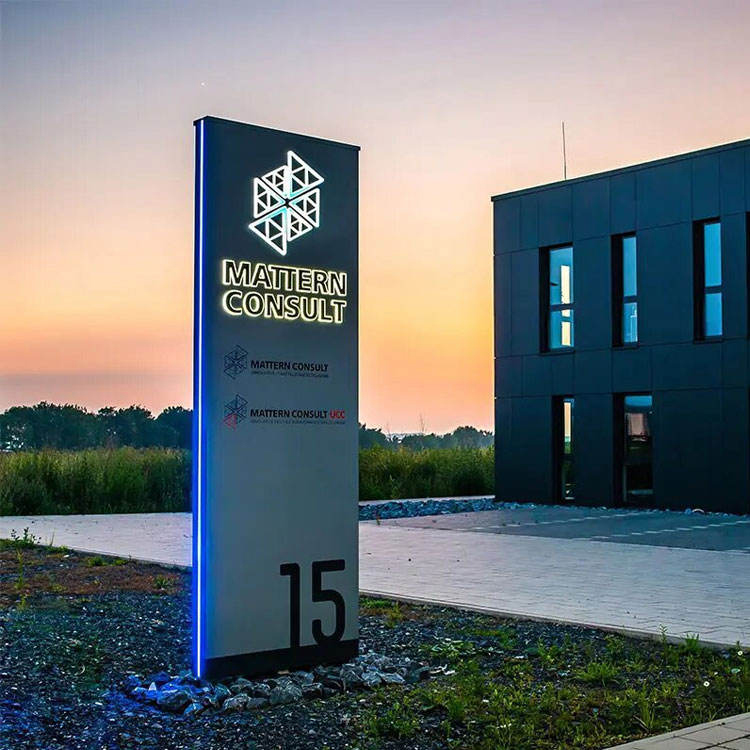
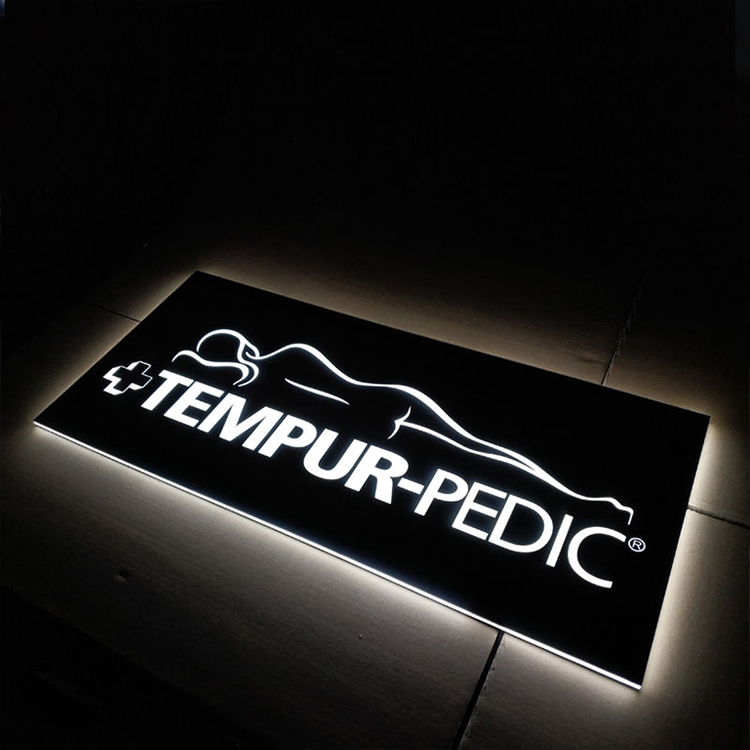
Tell us your sign type, dimensions, quantity, materials, illumination, voltage, mounting method, and delivery country. Our engineering team will review your requirements and prepare a factory quotation with recommended specifications and estimated production lead time.
Before You Leave, Get a Factory Quote
Share your drawings, dimensions, materials, quantities, illumination requirements, and delivery destination. Our signage engineering team will review your project and provide a tailored manufacturing proposal for LED letters, light boxes, pylon signs, gas station signage, or other custom sign systems.
Epoxy resin letters and acrylic channel letters can look nearly identical in a quotation rendering, yet their actual construction, weathering behavior, maintenance requirements, optical performance, and replacement costs can be radically different once the sign has operated for two or three years.
So why are they still compared mainly by appearance and unit price?
My answer is blunt: many signage quotations hide the engineering details that matter. “Epoxy letter” may describe several different resin formulations. “Acrylic channel letter” may mean anything from a well-sealed aluminum letter with a UV-stable cast acrylic face to a shallow, poorly ventilated cabinet built around bargain LEDs.
The material name alone does not determine quality. The complete assembly does.
Epoxy resin letters are usually the better option for compact logos, narrow strokes, intricate characters, rimless faces, interior feature walls, and applications requiring a refined illuminated surface.
Acrylic channel letters are generally the safer choice for exterior storefronts, large letters, exposed façades, serviceable installations, franchise rollouts, and projects where replacement parts must remain available years later.
Defined acrylic face with trimless or trim-cap construction
Fine-detail capability
Excellent
Moderate to excellent
Large-letter suitability
Limited by weight, curing, heat, and resin stability
Strong
Outdoor UV exposure
Highly dependent on resin chemistry and UV stabilizers
Generally more predictable with signage-grade acrylic
Face replacement
Often difficult or uneconomical
Usually easier
LED access
Can be restricted by sealed construction
Usually more serviceable
Repeat-order consistency
Requires strict resin and curing controls
Easier to standardize
Procurement risk
High when resin formulation is undisclosed
High when acrylic grade, thickness, and sealing are unspecified
My default recommendation
Premium interior and protected locations
Long-term exterior commercial signage
This is not a declaration that acrylic is “better.” It is a warning that epoxy resin demands tighter material control than many buyers realize.
What Are Epoxy Resin Letters?
Epoxy resin letters are dimensional illuminated letters in which a liquid resin system is poured, cast, or bonded into a formed metal letter body. Once cured, the resin becomes the illuminated face and can create a smooth transition from the front surface to the return.
That seamless appearance is the attraction.
A typical system may include a stainless steel or galvanized metal return, an internal LED array, wiring, a backing structure, pigments or diffusion additives, and a transparent or translucent resin formulation. The resin may also contain ultraviolet absorbers, hindered amine light stabilizers, fillers, colorants, or diffusion particles.
The epoxy resin LED letter range shows why designers like this construction: narrow strokes, small characters, custom logos, and smooth face illumination can be produced without the visually heavy trim cap associated with conventional channel letters.
A representative 3D epoxy resin frontlit letter system combines a resin surface, formed metal frame, and internal LEDs for retail, hospitality, healthcare, and office branding.
But “epoxy resin” is not a complete specification. It is only a material family.
A buyer still needs to know:
The base resin and hardener chemistry
Mixing ratio by weight
UV absorber type and dosage
Curing temperature and time
Maximum pour thickness
Pigment and diffuser compatibility
Glass-transition temperature
Water absorption data
Accelerated weathering results
Repair method
Batch traceability
I would reject any exterior epoxy-letter quotation that provides none of this information.
What Are Acrylic Channel Letters?
Acrylic channel letters are usually fabricated from aluminum or stainless steel returns with a separate translucent acrylic face. LEDs are mounted inside the letter body, and light passes through the acrylic front surface.
Polymethyl methacrylate, commonly written as PMMA, is produced from methyl methacrylate monomer, C₅H₈O₂. In signage, cast or extruded acrylic sheets are available in different colors, transmission levels, thicknesses, diffusion grades, and surface finishes.
The biggest structural difference is simple: the face remains a separate component.
That matters because a damaged face can often be removed and reproduced without rebuilding the complete letter. LEDs, wiring, drainage, fasteners, and power connections can also be made more accessible.
Acrylic channel letters can use:
Trim-cap faces
Trimless bonded faces
Jewelite-style retainers
Push-through acrylic
Routed acrylic panels
Flat or formed faces
Printed translucent films
Day-and-night acrylic
Dual-color films
The site’s acrylic face-lit LED letters illustrate the conventional approach: individual dimensional elements use acrylic light-emitting surfaces and internal LED illumination for storefronts, restaurants, hotels, offices, and shopping centers.
For larger commercial projects, the wider LED frontlit letter category also makes specification comparison easier because acrylic, aluminum, stainless steel, resin, and different lighting configurations can be evaluated within the same product family.
Epoxy Resin Letters vs Acrylic Letters: The Real Engineering Differences
Fine Details and Narrow Letter Strokes
Epoxy resin letters usually outperform conventional acrylic channel letters when a logo contains very narrow strokes, tight internal corners, small counters, thin scripts, or complex symbols.
A poured face can follow the metal return closely. There is no need to create a separate acrylic face and then retain, bond, or mechanically secure it around every tight curve.
This is where resin earns its price.
For a 120 mm-high luxury logo with 8 mm strokes, forcing a conventional acrylic channel-letter construction may produce thick borders, visible bonding lines, weak light uniformity, or an oversized letter depth. A properly engineered resin letter can look more proportionate.
But small does not automatically mean reliable. Narrow channels leave less space for LED placement, heat dissipation, wire routing, and waterproof connectors. The LED layout must be validated with an illuminated prototype, not guessed from a module-count spreadsheet.
Brightness and Light Uniformity
Neither material guarantees better brightness.
Brightness depends on LED output, module spacing, letter depth, face transmission, diffuser concentration, internal reflectance, operating current, thermal conditions, and the distance between the LED lens and illuminated face.
Epoxy resin can create soft and continuous illumination because diffusion material is distributed through the face. It can also trap hotspots when the pour is too clear, too thin, or positioned too close to the LED.
Acrylic offers predictable transmission when the manufacturer specifies the exact sheet grade. However, a shallow acrylic letter may show visible LED dots unless it uses suitable optical lenses, diffusion film, reflective coating, or denser module spacing.
I prefer photometric evidence over adjectives. Ask for:
Daytime face color
Nighttime illuminated color
Luminance readings in cd/m²
Five-point uniformity measurements
LED bin and CCT
Face transmission percentage
Prototype photographs at full exposure
Dimmed photographs showing hotspot distribution
“Bright and uniform” is marketing language. Measurements are specifications.
Rimless Appearance
Epoxy resin letters naturally support a smooth, rimless face. That is why they are popular in jewelry stores, cosmetic displays, hotel reception areas, luxury retail, and high-end interior branding.
Acrylic can also achieve a trimless appearance through bonded construction, but the workmanship must be excellent. Poor adhesive selection, insufficient bonding area, thermal expansion, or weak edge finishing can cause separation or visible glue lines.
For customers choosing primarily by visual refinement, I would compare full-size corner samples under illumination. A perfect rendering tells you nothing about cured-resin bubbles, edge polishing, adhesive shadows, trim tolerances, or nighttime hotspots.
Outdoor Durability: The Hard Truth About Epoxy
Epoxy resin can perform outdoors, but untreated or poorly stabilized epoxy is vulnerable to ultraviolet degradation.
A 2017 peer-reviewed study, The Effects of UV Light on the Chemical and Mechanical Properties of a Transparent Epoxy-Diamine System, exposed specimens to 800 hours of UV radiation. The formulation without a UV absorber lost about 30% of its tensile strength, while the formulation containing 3% Tinuvin 1130 lost approximately 11.94%. Elongation at break declined by about 35% without the absorber and 8.62% with it.
That laboratory resin was not a finished commercial sign face, so the percentages should not be copied directly into a service-life claim. The lesson is narrower but important: resin formulation and UV stabilization materially affect performance.
The study also explains why the phrase “UV-resistant epoxy” is inadequate. Resistant for how long? Under which irradiance? At what black-panel temperature? With what moisture cycle? At what stabilizer concentration?
Ask for test evidence referencing recognized accelerated-weathering methods such as ASTM G154, ASTM G155, ISO 4892-2, or ISO 4892-3. Then request the actual test duration, irradiance, cycle, color difference ΔE, gloss retention, cracking observations, and post-aging light transmission.
A vague certificate is not evidence.
Does Acrylic Never Yellow?
No transparent polymer is immune to aging.
Acrylic quality varies by resin purity, sheet production method, pigment, UV package, recycled content, surface treatment, and exposure conditions. Low-cost translucent sheet can shift color, become brittle, craze around fasteners, or lose impact strength.
But exterior-grade acrylic has one commercial advantage that resin often lacks: the illuminated face is normally replaceable.
That changes the lifecycle calculation. A yellowed acrylic face may require a new cut face and film. A yellowed cast-resin face may require remanufacturing the entire letter.
For exposed building elevations, that distinction can be worth more than the original material-price difference.
Epoxy Resin Letters vs Acrylic Channel Letters
LED Lifetime Is Not the Same as Sign Lifetime
Cheap quotations love one number: 50,000 hours.
I do not.
The U.S. Department of Energy’s LED guidance states that good-quality white LED products are commonly expected to reach 30,000 to 50,000 operating hours or longer, with useful life often described at the point where output falls to 70% of its initial level. DOE also warns that electronics can fail before the LEDs and that color shift may become unacceptable before complete failure.
A sign is a system, not an LED data sheet.
Its usable life depends on:
LED junction temperature
Drive current
Power-supply temperature
Water ingress
Connector quality
Solder joints
Internal corrosion
Face discoloration
Adhesive aging
Drainage
Ventilation
Service access
Voltage drop
Surge protection
Epoxy resin letters can seal the face effectively, yet an aggressively sealed structure may also make component replacement difficult. Acrylic channel letters usually offer easier access, but badly fitted faces and poorly designed drain holes can admit water.
Neither construction excuses weak electrical engineering.
Compliance Matters More Than the Face Material
For North American projects, buyers should evaluate the complete illuminated sign against applicable electrical and installation requirements rather than asking whether a single LED module carries a certification mark.
UL Solutions’ electric-sign guidance identifies UL 48 for electric signs, UL 879 for electric-sign components, UL 879A for LED sign and retrofit kits, and NEC Article 600 among the relevant standards. UL’s General Coverage program includes channel letters and allows certification for dry, damp, or wet locations.
That wet-location distinction should be stated in the quotation.
A certified power supply inside an uncertified, poorly wired, water-trapping letter does not make the completed sign compliant.
And a waterproof LED module cannot compensate for exposed splices.
Cost Comparison: Purchase Price vs Lifecycle Cost
Epoxy resin letters often carry a higher manufacturing cost for small and medium quantities because the process involves mixing, pouring, bubble control, curing, finishing, cleaning, and inspection. Failed pours create scrap that cannot always be reworked.
Acrylic channel letters use more standardized sheet-cutting, bending, retaining, bonding, and assembly processes. Larger letters are usually easier to produce consistently with acrylic faces than with thick resin pours.
However, the cheapest construction depends on scale and geometry.
Cost Variable
Epoxy Resin Letters
Acrylic Channel Letters
Tooling for custom details
Often low to moderate
Low to moderate
Labor sensitivity
High
Moderate
Batch-curing risk
High
Low
Large-face material usage
Can become expensive and heavy
Usually more efficient
Face-only replacement
Often impractical
Usually practical
LED servicing
May require destructive opening
Commonly accessible
Color matching years later
Difficult without retained formula and master sample
Easier with documented sheet and film codes
Small intricate logo economics
Often competitive
Can become expensive or impossible
Multi-site replacement logistics
More complex
Easier to standardize
The hard truth is that procurement teams routinely save 8% on manufacturing and later spend multiples of that saving on crane hire, site access, landlord approvals, electrical isolation, labor, and remanufacturing.
A face material should never be chosen without calculating access cost.
Which Material Should You Choose?
Choose Epoxy Resin Letters for Detailed Interior Branding
Epoxy resin letters make sense when the sign contains thin strokes, small characters, intricate symbols, or tightly spaced logo elements that would look clumsy as conventional channel letters.
Good applications include:
Luxury boutiques
Jewelry stores
Cosmetic counters
Hotel reception walls
Corporate lobbies
Shopping-mall interiors
Protected entrance signs
Premium restaurant interiors
Compact logo installations
I would still specify a removable mounting system, accessible driver location, retained resin formula, color master sample, and replacement procedure.
Choose Acrylic Channel Letters for Exterior Storefronts
For exposed retail façades, shopping centers, dealerships, supermarkets, restaurants, and roadside commercial buildings, acrylic channel letters are generally easier to inspect, maintain, and reproduce.
They also scale better.
A 1,200 mm-high letter with a 100 mm return is a natural acrylic-channel-letter application. Producing the same face as a heavy resin pour may add curing risk, thermal stress, weight, and repair difficulty without delivering a meaningful visual advantage from normal viewing distance.
The commercial LED letter sign range provides front-lit, backlit, dual-lit, resin-faced, and automotive-logo formats that can be evaluated against the building, viewing distance, and brand standard.
Choose Acrylic for Multi-Site Rollouts
Acrylic is usually the safer option when 20, 100, or 500 sites must match.
Why?
Because the specification can identify the acrylic manufacturer, sheet code, thickness, transmission, film code, return depth, paint system, LED module, module spacing, power supply, wiring diagram, and mounting pattern. Replacement faces can then be produced from controlled files.
Resin systems can also be standardized, but only when the supplier controls resin batches, pigment ratios, curing environment, pour depth, stabilizer dosage, and master samples with similar discipline.
For franchise and rollout programs, use an OEM and ODM signage manufacturing process that locks the approved drawing, bill of materials, illumination standard, finish, mounting configuration, and packaging method before mass production.
Choose Resin for a Look Acrylic Cannot Reproduce
Sometimes the visual result justifies the added risk.
A 15 mm-wide illuminated script may be impossible to build as a conventional channel letter without thickening the logo beyond recognition. A shallow resin-filled metal channel may preserve the original artwork and produce a cleaner illuminated line.
That is a valid reason to choose resin.
“More premium” is not.
A Procurement Specification That Prevents Expensive Mistakes
Before approving either system, require the supplier to confirm the following information in writing.
For Epoxy Resin Letters
Exact resin family and product code
Resin-to-hardener mixing ratio
Pigment and diffuser formulation
UV absorber or light-stabilizer system
Resin batch traceability
Pour depth
Curing time and temperature
Bubble-control process
Maximum service temperature
Accelerated-weathering test method
Color-change results
Water-resistance test
Repair and replacement method
Retained master sample
Warranty exclusions
For Acrylic Channel Letters
Cast or extruded acrylic
Acrylic manufacturer and sheet code
Face thickness
Light-transmission percentage
Daytime and nighttime color
Film manufacturer and color code
Trim-cap or trimless construction
Adhesive product code
Return material and thickness
Drainage and ventilation design
Face-removal method
Maximum letter dimensions
Thermal-expansion allowance
Replacement-face procedure
For Both Systems
LED manufacturer and model
LED bin, CCT, and color tolerance
Module spacing diagram
Power per letter
Driver manufacturer and model
Driver loading percentage
Input and output voltage
IP rating of relevant components
Wire gauge
Connector type
Surge protection
Grounding arrangement
Mounting pattern
Wet-location suitability
Applicable certification
Burn-in test duration
Warranty by component
Spare-parts package
Do not accept “same or equivalent” for LEDs, power supplies, acrylic, film, resin, or adhesives unless the substitution process requires written buyer approval.
That three-word phrase has ruined countless repeat orders.
FAQs
Are Epoxy Resin Letters Better Than Acrylic Channel Letters?
Epoxy resin letters are better for intricate, shallow, rimless, and compact illuminated designs, while acrylic channel letters are generally better for large exterior signs, replaceable faces, easier servicing, and repeatable multi-site production; the correct choice therefore depends on letter geometry, exposure, maintenance access, certification, and expected service life.
For protected interior applications with thin strokes, resin frequently provides the cleaner result. For exposed storefronts or large-format letters, I usually recommend acrylic unless the resin supplier provides convincing weathering and repair data.
How Long Do Epoxy Resin Letters Last Outdoors?
Outdoor epoxy resin letter life is the period during which the resin face, metal body, LEDs, wiring, seals, pigments, and stabilizers remain visually and electrically acceptable under sunlight, temperature cycling, rain, humidity, pollution, and cleaning, so no credible service-life number can be stated without formulation and weathering-test data.
A generic five-year claim tells buyers little. Ask what was tested, how it was tested, and which failures are excluded from the warranty.
Do Epoxy Resin Letters Turn Yellow?
Epoxy resin letters can turn yellow when ultraviolet radiation, heat, oxygen, unsuitable curing conditions, unstable pigments, or poorly selected resin chemistry alters the face material, although UV absorbers and light stabilizers may significantly reduce the rate of discoloration when correctly formulated and validated through accelerated-weathering tests.
Yellowing is particularly visible on white and clear faces. Always approve both a daytime color sample and an illuminated nighttime sample.
Are Acrylic Channel Letters Waterproof?
Acrylic channel letters are not automatically waterproof because the acrylic face is only one part of an electrical assembly whose actual moisture resistance depends on seams, retainers, adhesives, backs, cable entries, drain holes, power supplies, connectors, mounting penetrations, and whether the completed sign is evaluated for the intended wet or damp location.
For exterior work, request drainage details, component IP ratings, wet-location suitability, and photographs of cable-entry sealing.
Which Letter Type Is Easier to Repair?
Acrylic channel letters are usually easier to repair because their face can often be removed to access LEDs, wiring, connectors, and internal surfaces, whereas a cast or fully sealed epoxy face may require cutting, destructive opening, or complete remanufacture when the resin yellows, cracks, delaminates, or traps a failed component.
The exact answer depends on the construction. Require a written service procedure before approving either sign.
Which Is the Best Material for Channel Letters?
The best material for channel letters is the construction that preserves the approved artwork, achieves uniform illumination, survives the installation environment, complies with local electrical requirements, permits realistic maintenance, and delivers the lowest total lifecycle cost—not simply the material with the lowest factory price or most fashionable appearance.
For most large exterior letters, acrylic remains my default. For small, intricate, premium illuminated logos, stabilized resin deserves serious consideration.
Can Epoxy Resin Letters Be Used for Large Building Signs?
Epoxy resin letters can be used for building signage, but large resin faces increase material volume, weight, curing sensitivity, thermal stress, color-control difficulty, and repair cost, so acrylic-faced channel letters are normally more practical when characters become large enough that the rimless resin effect is no longer visible from the intended viewing distance.
Use resin where it solves a geometry or design problem. Do not use it merely because the sample looks expensive.
Specify the Sign Before Requesting the Price
Epoxy resin letters and acrylic channel letters solve different problems.
Resin delivers fine detail, smooth edges, compact depth, and a premium rimless appearance. Acrylic delivers scale, replaceability, standardized materials, easier servicing, and more predictable rollout control.
The wrong decision is rarely obvious on delivery day. It appears later—as yellowing, face separation, dark LEDs, trapped moisture, mismatched replacements, or an installation that cannot be opened without destroying it.
Before requesting a quotation, prepare the logo artwork, letter dimensions, installation environment, viewing distance, operating voltage, mounting surface, required certification, target service life, and maintenance-access plan.
Then send those project details through the custom signage quotation and engineering service. Ask for separate epoxy resin and acrylic channel-letter proposals, compare the complete bills of materials, and approve a full-size illuminated sample before authorizing production.
That is how you choose the right material—not by guessing, and certainly not by choosing the lowest line on a spreadsheet.
Custom Signage Factory manufactures commercial signs for sign companies, contractors, distributors, and multi-site brands. With a 20,000 m² workshop, 80+ production workers, 50+ machines, and an annual capacity of 100,000 pieces, we produce LED letters, light boxes, pylon signs, gas station signage, neon signs, and custom OEM sign systems.